


Your CCTV cameras are online. Or at least…you think they are. That is the dangerous assumption most organizations make—until something happens.
A break-in. A compliance audit. A legal dispute. A safety incident
Next? The cold realization that the stream was corrupted. Even worse? The footage was never captured, or the camera simply went offline without warning.
Moments like these come with real consequences. Trust is broken. Liability increases. And the very system designed to protect you becomes a silent failure point.
In a world increasingly reliant on surveillance to protect people, property, and critical infrastructure, camera health monitoring is non-negotiable.
In this article, we uncover why traditional “set it and forget it” security is no longer enough. You will learn how modern camera health monitoring works and what causes silent system failures. We will also explore why real-time CCTV diagnostics—powered by AI—are quickly becoming the new standard in surveillance reliability.
The Silent Guardian Behind Every Security Operation
CCTV cameras are often thought of as passive observers. But in reality, they are foundational to modern security infrastructure. They are everywhere—on streets and in offices, transit systems, hospitals, and government buildings. They deter threats, help spot incidents in real time, and provide evidence when something goes wrong.
That makes them essential for security, accountability, and compliance. And the market reflects this importance. Valued at $59.6 billion in 2025, the global CCTV industry is expected to grow to over $234 billion by 2034.
The benefits are measurable, too. A 2009 meta-analysis of surveillance systems showed:
CCTV installations in car parks led to a 51% drop in crime.
Public transit systems saw a 23% reduction, while residential areas and city centers showed more modest gains.
In homes and neighborhoods, CCTV was also tied to statistically significant crime reductions, with data pointing to a direct deterrent effect.
CCTV cameras are also valuable when it comes to solving crimes. In one study analyzing over 111,000 investigations, footage was available in 45% of cases and deemed useful in 29%. For serious crimes like robbery or assault, having clear video evidence significantly increased clearance rates.
They can only protect when they are working. And many are not.
According to Security Journal Americas, an estimated 50% of surveillance cameras experience view-related issues each year.
In sectors like healthcare, these failures are not mere inconveniences. They can lead to severe legal exposure. For instance, the UK’s NHS came under fire when faulty or missing surveillance contributed to patient harm and complicated investigations.
Surveillance may be silent, but it should not be invisible.
Without active CCTV health monitoring, even your most critical cameras can fail, putting people, assets, and your reputation at risk.
4 Common Causes of Camera Failures
Camera failures are not always obvious. Most do not start with a sudden blackout or system alert. They build up quietly—bit by bit—until a critical moment exposes the blind spot. Knowing what causes these failures is key to preventing them.
1. Power and Connectivity Problems
Surveillance systems depend on stable power and reliable network connections. One faulty switch, a frayed cable, or inconsistent voltage can take a camera offline. And in many cases, there is no alert—just a silent outage that no one notices until footage is missing.
These issues are especially common in older buildings or complex, multi-site deployments.
2. Environmental and Physical Damage or Obstructions
Outdoor and warehouse cameras can take a beating. Harsh weather, vandalism, wildlife, or even shifting mounts can impact the view. Indoors, something as simple as a new sign or a stack of boxes can block a lens. The camera may still be “online,” but the feed is worthless.
3. Firmware and Software Failures
As cameras get more advanced, they also become more dependent on code. Firmware bugs, failed updates, or software incompatibilities can crash streams or freeze feeds. And because many systems do not check video quality, these failures often go unnoticed for days (or longer).
4. Degradation That Slips Through the Cracks
Some cameras simply degrade over time. Blurring, contrast loss, video degradation, or jitter may not raise alarms, but they still compromise the integrity of your footage. These “soft failures” are especially dangerous because they compromise video stream integrity—and your entire security system
When Cameras Fail, So Does Security
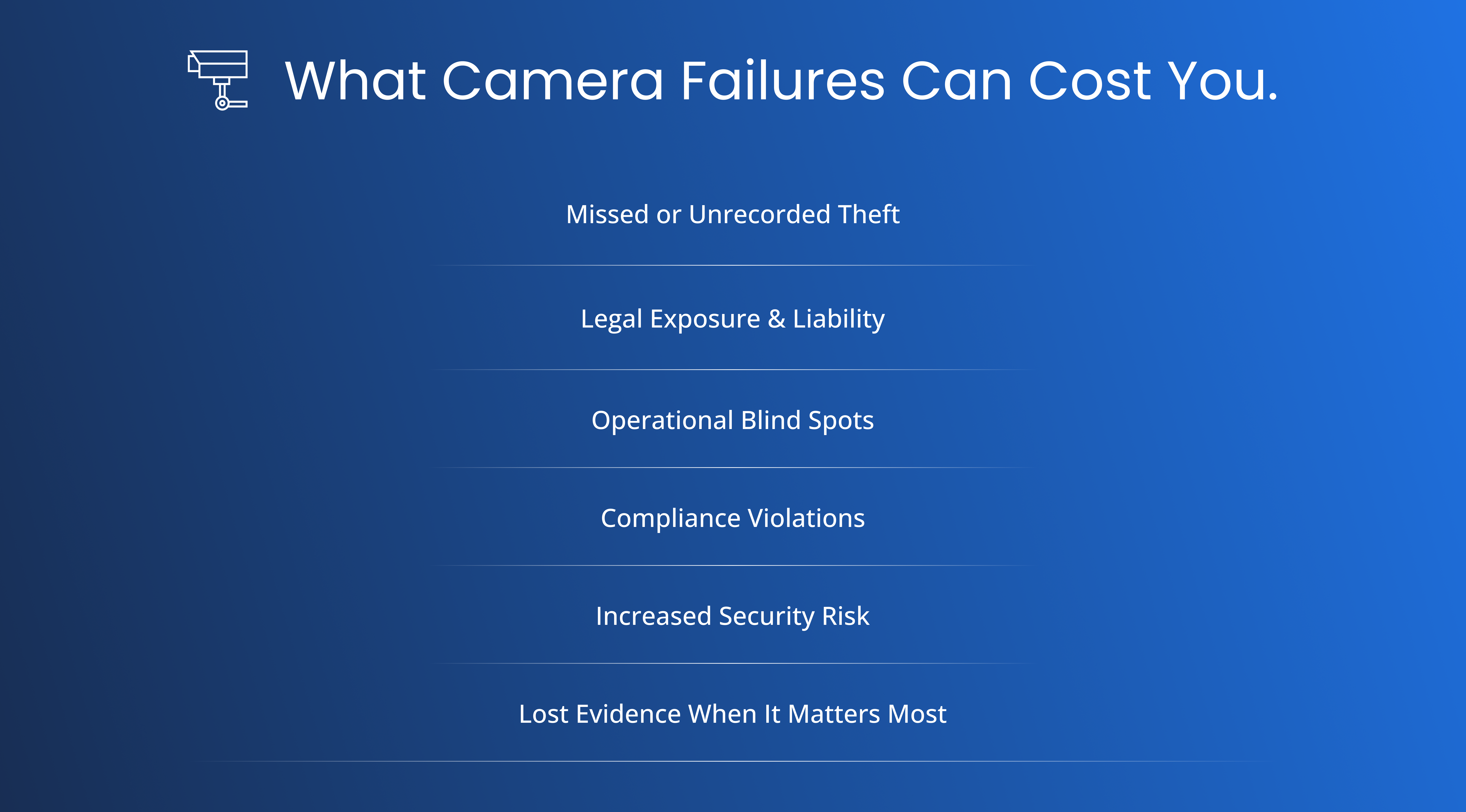
A non-functioning camera is a missed opportunity to prevent harm, enforce accountability, or respond in time. Blind spots create real consequences, many of which do not become obvious until it is too late.
Missed Detections = Missed Events
A camera that is not operating correctly means no alert, no footage, and no way to verify what happened. Whether it is theft, misconduct, injury, or a regulatory breach, a failed camera can leave an entire investigation without answers.
This is especially dangerous in high-risk environments. Hospitals, warehouses, data centers, prisons, and transit hubs rely on working surveillance systems to operate safely and stay compliant.
Real Failures in High-Stakes Settings
CCTV failures have already led to serious (and highly public) consequences. Here are three examples:
- Religious Site Theft: In India, the Padmanabhaswamy Temple, known as the richest temple in the world, recently made headlines after gold was stolen from its premises. Investigators revealed the CCTV camera meant to cover the area was not working at the time of the theft.
- High-Profile Legal Failure: In the U.S., key footage related to Jeffrey Epstein was accidentally lost. Prosecutors later revealed that jail officials had saved the wrong cell’s footage and that two nearby surveillance cameras had malfunctioned. The loss of video evidence fueled widespread speculation and public distrust in the system.
- Major Surveillance Breakdown: In Washington, D.C., a pregnant 22-year-old woman, Samya Gill, was fatally shot just 528 feet from a city-operated crime camera. Records later revealed the camera had malfunctioned the day before. In a separate case months later, two men were killed at a location where another crime camera had gone offline just hours earlier. Over a 17-month period, D.C.’s CCTV system experienced more than 500 documented failures—some lasting days—raising serious concerns about reliability and public safety.
Failures like these have far-reaching consequences. They lead to theft, legal breakdowns, eroded trust, critical blind spots, and public fallouts. When video is missing (or unusable), it affects everything from investigations to compliance.
That is where proactive CCTV health monitoring comes in.
CCTV Health Monitoring: The Foundation of Reliable Surveillance
Camera health monitoring is the automated and ongoing process that tracks the condition and performance of your CCTV cameras. It is a continuous system health check that evaluates live-feed status and ensures surveillance reliability, camera uptime, and video stream integrity.
Real-time camera monitoring typically includes features like camera downtime and frame loss detection. It also picks up issues like:
- Image and video degradation
- Broken or black video streams
- Obstructed views or misaligned angles
- Connectivity drops or total disconnection
- Login credential changes
- Loss of video feed or recording capabilities
The system checks the status of each camera in your network to make sure they are all online, streaming properly, and capturing clear footage. When something goes wrong—whether it is a broken stream, degraded video quality, or a full disconnect—camera health monitoring flags the issue, providing an opportunity to repair or replace the camera before a critical event is missed.
CCTV Diagnostics vs. Periodic Checkups
Many organizations still rely on scheduled inspections or manual spot checks. These methods are often weekly or monthly, leaving large gaps where failures can go unnoticed. Even when performed consistently, manual checks miss issues like:
- Contrast loss or stuttering
- Intermittent outages
- Gradual image degradation
As surveillance systems scale, manual processes simply cannot keep up. No team can monitor hundreds (or thousands) of cameras by hand without delays or blind spots.
Camera system monitoring closes that gap. It tracks camera performance 24/7 and sends instantaneous alerts when something breaks, degrades, or becomes unreliable. Instead of reacting to failures, you catch them before they become risks.
Detecting the Silent Failures
Health monitoring tools often catch issues that would slip through traditional checks:
- A camera is streaming, but the feed is black.
- The lens is fogged, dirty, or partially blocked.
- The video stutters or drops frames intermittently.
- The camera has rebooted and failed to reconnect.
- An update introduced a bug that is affecting footage quality.
These are not things you will spot in a dashboard ping or during a casual walk-by. But they are exactly the types of failures that lead to liability when something goes wrong.
Building a Proactive Camera Health Strategy
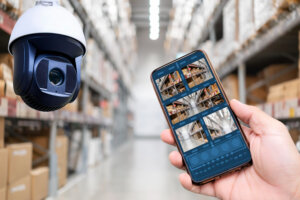
A proactive camera health strategy ensures that every camera is doing what it is supposed to: capturing clear, continuous, and usable footage.
Here is what a modern strategy looks like:
1. Proactive Monitoring at Scale
Live camera health monitoring ensures that systems stay online and operational, without the gaps and delays of manual inspection. This means knowing immediately when something goes wrong, whether it is a broken stream, dropped connection, or degraded image quality.
2. Multi-Layered Diagnostics
Effective monitoring requires visibility into how well each camera is functioning. That is where we bring precision to camera health, defined across several key indicators, such as:
- Connectivity: Detecting when a camera goes offline due to network issues or incorrect credentials.
- Scene Integrity: Identifying major changes in the camera’s view, which can signal tampering or misalignment.
- Image and Stream Quality: Tracking resolution drops, unstable feeds, or stream degradation that affects footage usability.
- Motion and Recording Status: Notifying teams when no motion is detected for long periods or when footage isn’t being stored properly.
This level of insight allows security teams to go beyond basic uptime and address the root causes of failure before they escalate into security gaps or compliance issues.
3. Seamless Integration
A strong camera health strategy does not mean starting from scratch. Our camera health monitoring solution integrates with existing camera infrastructure, adding AI-powered diagnostics and alerting without the need for new hardware. That means you can modernize your surveillance system without overhauling it.
4. Operational Intelligence
A proactive strategy also includes clear reporting and visibility. Our camera health monitoring solution provides dashboards and historical data to help teams track trends, analyze system performance, and support audits or investigations with confidence.
With a smart, AI-driven approach to camera health, your team can maintain full coverage, reduce downtime, and protect what matters most.
Surveillance Reliability Starts with Healthy Cameras
Surveillance systems are only as reliable as the cameras behind them. But with so many potential failure points, from power issues to silent degradation, it is no longer enough to assume everything is working.
Camera health monitoring is not a nice-to-have. It is a must-have. And the organizations that take a proactive approach are the ones staying ahead—minimizing risk, avoiding costly blind spots, and maintaining trust.
With Actuate, teams gain full visibility into camera performance, backed by AI-powered diagnostics that integrate with the systems they already have.
It is a smarter way to keep your security strategy resilient, responsive, and ready.
Want to see how it works? Book your demo today.
About Actuate
Actuate delivers cutting-edge AI video analytics that transform traditional surveillance cameras into proactive monitoring systems. Our solutions go beyond simple gun detection software to include advanced AI weapon detection, fire detection, slip & fall detection, and much more. The user-friendly cloud platform offers seamless integration with existing systems, enabling security providers to enhance responsiveness without costly on-site hardware upgrades. Designed to strengthen remote video monitoring operations, Actuate’s technology dramatically reduces false positive alarms while improving overall system efficiency.